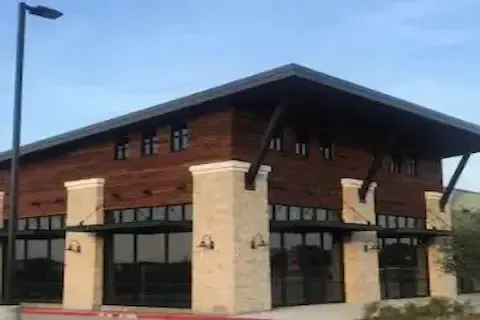
Maple Grove Crossing Shopping Center Roofing Outlook
Maple Grove Crossing sits at one of the busier retail intersections in the northwest metro, drawing consistent foot traffic across its mix of service tenants, restaurants, and specialty retailers. For property owners and asset managers responsible for the roofing envelope on this footprint, the decision between coating, overlay, and full replacement carries real financial weight. Each option performs differently depending on membrane age, drainage history, and lease obligations — and getting that decision wrong can mean either premature capital spend or a repair cycle that costs more over time than replacement would have.
Understanding the Maple Grove Crossing Roof Footprint
Shopping center roofs in Maple Grove typically involve large expanses of low-slope membrane systems — either TPO, EPDM, or modified bitumen — installed across multiple tenant bays with shared drainage infrastructure. Maple Grove Crossing, like most retail properties developed in this corridor, likely has a combination of installation vintages across different sections of the building, particularly if phased construction or tenant build-outs expanded the original footprint over time.
This matters because a uniform decision — coating the whole roof, or replacing everything at once — often doesn't reflect the actual condition variation across the membrane. Some bays may have years of remaining useful life, while others show advanced degradation at seams, drains, or HVAC penetrations. A condition-based approach section by section is almost always more cost-effective than treating the entire roof as a single unit.
Coating as a Near-Term Protective Strategy
Fluid-applied roof coatings — silicone or acrylic systems — are the most commonly considered near-term intervention for retail roofs in Minnesota. They extend membrane life, add reflectivity, and can be installed without disrupting tenant operations below. For Maple Grove Crossing owners weighing coating, the core question is substrate condition.
Coatings work when the existing membrane is structurally sound and retains adequate adhesion. They do not fix wet insulation, failed seams, or membranes that have lost flexibility from thermal cycling. Before committing to a coating program, an infrared scan of the full roof deck will identify moisture-compromised insulation that would trap water beneath the coating and accelerate deterioration. If scan results show isolated wet areas, those sections can be cut out and replaced before coating proceeds — a hybrid approach that preserves the economics of coating while addressing the problem zones.
In a Minnesota climate, coatings also need to account for freeze-thaw cycles. A silicone coating applied to a membrane in adequate condition can remain viable through multiple freeze-thaw seasons, but application timing matters. Late-season installation in Maple Grove — October or later — risks adhesion failure if temperatures drop before the coating fully cures.
Roof Overlay as a Mid-Range Capital Solution
When the existing membrane is too degraded for coating but the insulation and deck remain structurally sound, a roof overlay installs a new membrane layer directly over the existing system. This avoids the cost and waste of full tear-off and reduces labor time, which matters for occupied retail properties where roofing activity above tenant spaces creates scheduling constraints.
For Retail Property Roofing Services in a shopping center context, overlays offer a practical middle path — but they carry two limitations property owners should understand. First, building codes typically allow only one overlay before tear-off becomes mandatory, so choosing an overlay now forecloses that option for the next cycle. Second, overlaying a roof that has undetected wet insulation creates a trapped moisture condition that will generate progressive deck damage invisible until it becomes a structural issue.
If overlay is being considered for Maple Grove Crossing, the same pre-project infrared scan protocol applies. The overlay option is most defensible when scan results are clean, the deck shows no soft spots during a walking inspection, and the drainage system can handle the added membrane weight without slope modification.
Full Replacement and the Case for Long-Horizon Planning
Full roof replacement — tear-off, insulation upgrade, and new membrane installation — is the highest upfront cost and the option that generates the most operational disruption. It is also, in many cases, the most financially rational choice when membrane age exceeds 20 years, when multiple repairs have failed to hold, or when an energy efficiency upgrade justifies the incremental investment.
Maple Grove's commercial property market has seen increased attention to energy performance metrics, particularly for multi-tenant retail buildings where utility cost allocation affects lease negotiations. Replacing an aged membrane with a high-R-value tapered insulation system and a reflective TPO membrane can materially reduce heating and cooling loads across tenant bays — a tangible operating cost benefit that partially offsets replacement cost over a standard lease term.
For asset managers running multi-year capital planning models, a replacement decision tied to a lease renewal or anchor tenant build-out often makes sense as a coordination strategy. Scheduling replacement during a planned vacancy or renovation period eliminates the tenant disruption variable and can simplify contractor scheduling.
Drainage and Slope Conditions Specific to This Area
Drainage design in Maple Grove shopping centers built across the past two decades reflects the flat-terrain drainage challenges common to the northwest metro. Ponding water is among the most consistent precursors to membrane failure in this market, and Maple Grove Crossing is not exempt from those dynamics. Interior drains, scuppers, and overflow conditions should all be assessed as part of any roofing decision — not as an afterthought.
If the current drainage infrastructure shows persistent ponding in any roof section, addressing slope through tapered insulation during replacement is almost always the right call. Coating or overlaying a roof section with a known ponding problem delays but does not resolve the underlying accelerant of membrane degradation.
Coordinating with Tenant Lease Obligations
Shopping center roofing decisions do not happen in isolation from lease structure. Depending on the lease type — gross, net, or modified gross — roofing capital expenditures may be partially recoverable through CAM charges or may fall entirely to the landlord. Before committing to a replacement or overlay scope, reviewing the lease language governing capital repairs and roof maintenance is a prudent step. Some long-term tenants in retail centers have approval rights over major capital work that could affect their operations.
For additional context on how other retail properties in this corridor have approached roofing decisions, see our overview of the arbor lakes retail roof situation, which covers similar membrane and drainage dynamics on a comparable footprint.
Making the Right Call for This Property
The practical path forward for Maple Grove Crossing owners starts with a condition assessment — infrared scan, walking inspection, drain flow evaluation — rather than with a preselected solution. The data from that assessment determines whether coating, overlay, or replacement is the defensible economic choice for each roof section. A reputable contractor working in the Maple Grove commercial market will present options tied to actual conditions rather than defaulting to the highest-cost scope.
Budget planning for any of these three approaches should account for Maple Grove's climate, the age and maintenance history of the existing system, and the operational constraints of an occupied retail center. Getting those variables right before committing to a scope is what separates a well-managed capital project from an expensive reactive one.
