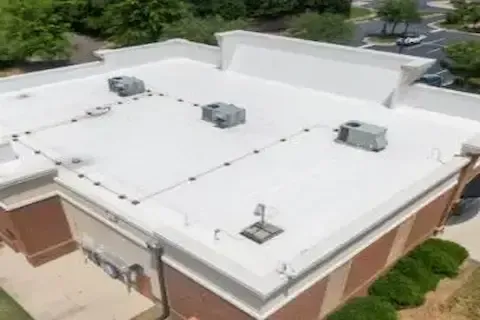
Spring Flat Roof Replacement Planning Maple Grove MN
Spring in Maple Grove moves fast. By the time the snow is gone from parking lots along Main Street and the ground has firmed up enough for equipment, commercial roofing contractors already have their summer schedules filling in. If your building needs a flat roof replacement this year, the planning window you have right now is the most valuable one available to you. Waiting until June or July means longer lead times, tighter material availability, and the real possibility of pushing your project into fall — or worse, into another winter with a roof that should have already been replaced.
Why Spring Is the Strategic Planning Window for Flat Roof Replacement
Flat roof replacements on commercial buildings are not small undertakings. They require material ordering, crew scheduling, permitting, and coordination with your building's operational calendar. In Maple Grove, the ideal installation season runs roughly from late April through October, but the bulk of demand from commercial property owners competes for that same window. Contractors who specialize in Commercial Flat Roof Replacement across the northwest metro begin booking projects well before the ground thaws. March and April are when smart building owners secure their place in the queue — not May or June when the season is already underway.
Planning in spring also gives you time to make better decisions. You can get multiple assessments, compare material options, review contractor qualifications, and understand your full scope of work without pressure. Rushed decisions made under deadline tend to lead to scope gaps, mismatched expectations, and regret about material selection.
What a Spring Planning Timeline Looks Like
A realistic spring planning timeline for a commercial flat roof replacement in Maple Grove typically breaks down into several distinct phases. Understanding these phases helps you track progress and know when you need to make decisions.
Phase One: Roof Assessment and Documentation
Before you can plan a replacement, you need an accurate picture of your current roof's condition. This means a thorough inspection that goes beyond a visual walkthrough. Infrared scanning and core samples help identify moisture intrusion and insulation saturation that aren't visible from the surface. This documentation gives your contractor the information needed to build an accurate scope of work and helps you understand whether a full tear-off is necessary or whether your existing substrate can support a re-cover system.
Phase Two: Material Selection and Specification
TPO, EPDM, and modified bitumen systems each have different performance profiles, cost structures, and installation requirements. The right choice depends on your building's use, your energy goals, the local climate demands that come with Minnesota winters, and your long-term ownership plans. This phase should also include decisions about insulation thickness, membrane thickness, and attachment method — all of which affect both cost and performance. Don't skip this step or defer it to the contractor without your own informed input.
Phase Three: Contractor Selection and Contract Review
Selecting the right contractor is not simply a matter of finding the lowest bid. In the Maple Grove commercial market, you want a contractor with verifiable experience on projects similar to yours in size and system type, manufacturer certifications for the system you're installing, and a clear warranty structure that covers both materials and workmanship. Review the contract carefully before signing, with particular attention to how change orders are handled, what the payment schedule looks like, and how project delays are managed.
Phase Four: Permitting and HOA or Property Management Coordination
Commercial roofing projects in Maple Grove require permits through the City of Maple Grove's Community Development department. Permit timelines vary, but building in at least two to three weeks for permit approval is prudent. If your property is part of a business park or managed under a commercial association, you may also need approval from that body before work can begin. Identifying these requirements early prevents unexpected delays once your contractor is ready to mobilize.
Phase Five: Pre-Construction Site Preparation
Before the crew arrives, you need to coordinate roof access, communicate with tenants or building occupants about noise and potential disruptions, arrange for dumpster placement, and confirm that mechanical equipment on the roof has been accounted for in the scope. Properties along Hemlock Lane or near the Maple Grove business corridors often have shared parking situations that need to be considered when planning equipment staging and material delivery.
Material Lead Times Are a Spring Reality Check
One factor that catches many commercial property owners off guard is material lead time. High-demand roofing membranes and insulation boards are not always sitting in a local warehouse waiting for your project. Depending on the system you select and current supply conditions, lead times of three to six weeks are not unusual. If you begin planning in late spring, those lead times can push your start date into the heart of summer or beyond — compressing the available installation window and increasing the risk that weather delays push you into fall.
Locking in your project early means your contractor can place material orders while supply is more readily available, securing your spot in both the production queue and the installation schedule.
What Happens When You Wait Too Long
The consequences of delayed planning are not hypothetical. Commercial property owners in the northwest metro who begin the replacement process in summer often find themselves facing a difficult choice: accept a rushed installation with less desirable timing, or extend an aging and failing roof through another Minnesota winter. Neither outcome is good. A flat roof that has known moisture intrusion going into freeze-thaw cycles faces accelerating damage, potential interior water damage, and higher remediation costs come spring.
Understanding long does commercial flat roof systems last under Minnesota conditions is useful context when evaluating how much runway you actually have. If your roof is within a few years of the end of its expected service life, spring is not the time to wait and watch — it is the time to act.
Closing Perspective on Spring Timing
Commercial flat roof replacement in Maple Grove is a significant investment that deserves deliberate, well-timed planning. The businesses and property managers who get the best outcomes are the ones who treat spring as a planning season, not a waiting season. Lock in your assessment, make your material decisions, select your contractor, and get your permit applications moving. The construction season in Minnesota is finite, and the contractors doing the best work in this market are not waiting for you to call in July.
