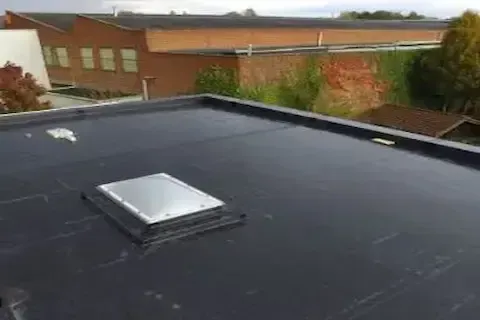
Ballasted EPDM Retrofit in Maple Grove Office Parks
Many office parks in Maple Grove constructed during the 1990s building boom feature ballasted EPDM roofing systems that are now approaching the end of their service life. These roofs typically consist of a rubber membrane held down by gravel or pavers rather than adhesive, creating unique challenges for building owners considering replacement options. Understanding the retrofit process from ballasted to adhered EPDM systems helps property managers make informed decisions about their roofing investments.
Understanding Ballasted EPDM Systems
Ballasted EPDM roofs were popular in commercial construction due to their lower installation costs and ease of maintenance access. The system relies on loose-laid membrane secured by aggregate or concrete pavers, allowing thermal movement without stress on the material. However, these systems present several limitations as buildings age, including increased structural load, drainage complications, and difficulty accessing the membrane for repairs.
The additional weight from ballast materials can stress aging structural components in office buildings. Wind uplift resistance depends entirely on ballast distribution, which may shift over time or prove inadequate during severe weather events common in Minnesota. EPDM Roofing Systems offer superior performance when properly adhered to the substrate.
Structural Assessment Requirements
Before retrofitting any ballasted system, structural engineers must evaluate the building's capacity to handle load redistribution. Removing ballast reduces dead load significantly, potentially affecting the building's structural balance. Office parks in Maple Grove often feature steel frame construction with metal decking that may require reinforcement or modification during the retrofit process.
Load calculations must account for snow loads, equipment placement, and future rooftop installations. Many 1990s office buildings were designed with minimal roof load factors, making structural assessment crucial before proceeding with any retrofit project. Professional evaluation ensures compliance with current building codes and prevents costly structural issues.
Retrofit Process Considerations
Converting from ballasted to adhered EPDM requires careful planning and execution. The existing membrane condition determines whether it can remain as part of a multi-layer system or requires complete removal. Ballast removal alone generates significant debris that must be properly disposed of according to local regulations.
Surface preparation becomes critical for adhesive systems. The substrate must provide adequate bond strength and remain stable under thermal cycling. Insulation upgrades often accompany retrofit projects, improving energy efficiency while updating the roof assembly to current standards. Weather timing affects project scheduling, as adhesive application requires specific temperature and moisture conditions.
Membrane Evaluation
Existing EPDM membranes undergo thorough inspection to assess their suitability for incorporation into the new system. Membrane thickness, seam integrity, and overall condition determine retrofit options. Some membranes can serve as vapor barriers in new assemblies, while others require complete replacement.
Common Retrofit Mistakes
Property owners frequently underestimate the complexity of ballasted system conversion. Attempting to simply adhere new membrane over existing ballast creates multiple failure points and violates manufacturer specifications. Inadequate structural assessment leads to deflection problems and membrane stress concentration.
Drainage modifications often receive insufficient attention during retrofit planning. Ballasted systems typically feature different drainage patterns than adhered systems, requiring careful evaluation of existing roof drains and potential relocation. Ignoring thermal movement requirements in adhered systems causes premature membrane failure and expensive repairs.
Installation Sequencing
Proper retrofit sequencing prevents weather exposure and minimizes business disruption. Attempting to remove ballast and install new systems simultaneously creates unnecessary risk. Professional contractors develop phased approaches that maintain building envelope integrity throughout the process.
Local Building Code Compliance
Maple Grove building officials require permits for substantial roof modifications, including ballasted system retrofits. Current energy codes may mandate insulation upgrades that exceed original building specifications. Wind uplift requirements have evolved significantly since the 1990s, affecting adhesive selection and application methods.
Local ordinances regarding debris disposal and construction timing impact project planning. epdm roofing systems property owners must coordinate with city departments to ensure compliance with noise restrictions and waste management requirements during ballast removal operations.
Environmental Considerations
Minnesota's climate creates specific challenges for retrofit projects. Freeze-thaw cycles affect adhesive performance and curing times. Summer heat can compromise membrane handling and installation quality. Seasonal planning ensures optimal conditions for critical installation phases.
Professional Selection Criteria
Choosing contractors experienced with ballasted system retrofits proves essential for successful outcomes. General roofing contractors may lack the specialized knowledge required for complex conversion projects. Professional qualification should include structural assessment capabilities, manufacturer certifications, and demonstrated experience with similar office park projects.
Contractor selection should emphasize local experience with Maple Grove building requirements and weather conditions. Proper insurance coverage becomes critical given the complexity and potential risks associated with ballasted system conversion. Professional references from similar office park projects provide valuable insight into contractor capabilities and project management skills.
Long-term Performance Benefits
Successfully retrofitted adhered EPDM systems provide superior long-term performance compared to aging ballasted installations. Improved wind resistance, enhanced drainage capability, and easier maintenance access justify the investment in many office park applications. Energy efficiency improvements through insulation upgrades often provide additional operational savings that help offset retrofit costs over time.
