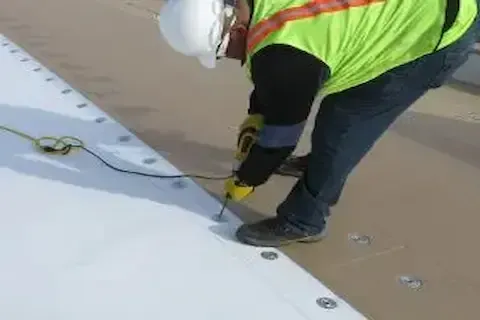
Cold Weather TPO Installation Rules Maple Grove MN
Minnesota winters do not pause construction schedules, and many Maple Grove building owners need roofing work completed regardless of what the thermometer reads. TPO membranes are durable and cost-effective, but they are also sensitive to temperature in ways that directly affect installation quality. Cold weather changes how adhesives bond, how seams weld, and how the membrane itself behaves on the roof deck. Understanding what responsible contractors do differently in cold conditions helps you evaluate bids, ask the right questions, and protect your investment before the first heavy snow hits.
How Cold Temperatures Affect TPO Membrane Behavior
TPO membrane stiffens as temperatures drop. At or below 40 degrees Fahrenheit, the material loses flexibility and becomes more prone to cracking or tearing during unrolling, cutting, and positioning. A membrane that handles easily in September can fight back against installers in November, creating small stress points that are invisible until water finds them later.
Beyond flexibility, cold affects the membrane's ability to relax into a flat, even plane. TPO that is installed taut in cold weather will attempt to contract further as temperatures fall overnight. Without proper allowance for thermal movement, seams and flashings experience stress that can open over time. Experienced crews account for this by adjusting layout and fastening patterns before any membrane hits the roof deck.
Adhesive Application in Low Temperatures
Fully adhered TPO systems rely on bonding adhesive to hold the membrane against the insulation or cover board below. Most commercial-grade bonding adhesives carry a minimum application temperature between 40 and 50 degrees Fahrenheit. Below that threshold, the adhesive thickens, loses tackiness, and may never achieve the bond strength the manufacturer specifies.
Some contractors store adhesive in heated areas overnight and work quickly once it reaches the roof. Others use low-temperature formulations approved for cold-weather work. Both approaches can be valid, but only if the actual substrate surface temperature is also within range. A cover board that has been sitting on a cold roof can drop well below air temperature and will pull heat out of the adhesive faster than you expect. Responsible installers verify substrate temperature with a contact thermometer before applying anything.
If you are reviewing bids for a winter project, ask each contractor specifically which adhesive product they plan to use, what its minimum rated application temperature is, and how they intend to verify field conditions before committing membrane to deck. Vague answers are a red flag on any Maple Grove job site.
Heat Welding and Seam Quality in Cold Conditions
Mechanically attached and adhered TPO systems both depend on hot-air welding to fuse seams and flashings. An automatic welding machine drives a jet of hot air between two overlapping sheets and presses them together with a roller, creating a bond that is stronger than the membrane itself when done correctly.
Cold air is the enemy of this process in two ways. First, the ambient temperature affects how quickly the membrane surface cools after the hot air passes through. If the weld zone cools too fast, the fusion is incomplete and the seam is weak. Second, the welding equipment itself must be calibrated for actual field conditions. A machine set for summer temperatures in November will produce cold welds that pass visual inspection but fail probe testing.
Proper cold-weather welding requires slower machine travel speed, higher temperature settings, and frequent probe testing of completed seams. Crews should be adjusting weld parameters throughout the day as morning temperatures rise and afternoon sun warms the membrane. On a Maple Grove flat roof in February, conditions can shift several degrees between 8 a.m. and noon, and a responsible crew tracks those changes continuously.
Mechanical Fastening Considerations in Winter
Mechanically attached TPO systems use fasteners and plates driven through the membrane and insulation into the structural deck below. Cold weather affects this process less dramatically than adhesive or welding work, but there are still important considerations. Fastener torque must be consistent, and cold-stiffened membrane can mask improper fastening depth. Crews working in insulated gloves may also have reduced tactile feedback, making quality control harder at the fastener level.
Seams in mechanically attached systems still require heat welding, so all of the weld quality concerns described above apply equally here. The fastening field may be more forgiving of cold, but the perimeter and seams are not.
What Maple Grove Contractors Should Be Doing
Legitimate commercial roofing contractors working in the Maple Grove area follow manufacturer cold-weather guidelines because their warranties depend on it. Most major TPO manufacturers, including Firestone, GAF, and Carlisle, publish specific cold-weather installation instructions that set minimum temperatures, required equipment adjustments, and additional inspection steps. A contractor who dismisses those guidelines is working outside the scope of the warranty, which means you bear the cost if something fails.
Expect a professional crew to arrive with heated storage for adhesives, a calibrated contact thermometer, a heat gun for pre-warming membrane edges before welding, and a probe for seam testing throughout the day. Temporary enclosures or tarps may also be used on large jobs to create a warmer working environment at the roof surface. These are not optional extras — they are the baseline for responsible cold-weather work.
For more context on how installation quality affects long-term performance, read our overview of long does tpo roofing typically last under Minnesota conditions.
Scheduling and Realistic Expectations
If temperatures are forecast to stay below 20 degrees Fahrenheit, most reputable contractors will recommend postponing membrane installation. Below that threshold, even with every precaution in place, the risk of inadequate adhesion or failed welds becomes too high to justify proceeding. Emergency repairs are a different matter, but planned installations benefit from a weather window above freezing when possible.
Maple Grove winters are long, but they do include stretches of relatively mild weather even in January and February. A well-organized contractor will monitor the forecast and schedule membrane work around those windows, using the coldest days for preparation work like insulation fastening and deck inspection. That kind of scheduling discipline is a sign of a crew that understands the material and takes warranty compliance seriously.
When you are planning a cold-season project, start with a detailed conversation about materials, temperature limits, and contingency plans. Our TPO Roofing Installation services include cold-weather planning as part of every project scoped during the fall and winter months.
Making an Informed Decision Before Winter Work Begins
Cold-weather TPO installation is not inherently problematic. It is performed successfully on commercial buildings across Minnesota every year by crews who know the material, follow the manufacturer guidelines, and adjust their process for actual field conditions. The risk comes from contractors who treat winter installation the same as summer work and cut corners on adhesive handling, weld calibration, or temperature verification.
Ask for the specific products being used. Ask about cold-weather protocols. Ask how seam quality will be verified. A qualified contractor in the Maple Grove area will have clear, confident answers to each of those questions before a single roll of membrane leaves the truck.
