How Long Does TPO Roofing Last on Maple Grove Buildings
TPO roofing on Maple Grove commercial buildings typically lasts 15 to 30 years, depending on membrane thickness, attachment method, and maintenance frequency. A 45-mil membrane installed with loose-laid ballast will underperform compared to a 60-mil or 80-mil fully adhered or mechanically fastened system. Minnesota's freeze-thaw cycle, ice damming pressure, and summer UV intensity compress service life on undersized membranes. With correct specification, professional installation, and annual inspections, most Maple Grove building owners reach the upper end of that range before a full replacement is needed.
How Does Membrane Thickness Affect TPO Lifespan?
Thickness is the single strongest predictor of how long a TPO roof survives Minnesota winters. The three common options are 45-mil, 60-mil, and 80-mil membranes. A 45-mil sheet is the minimum specification and works on low-traffic roofs with consistent maintenance, but its thinner weld zone and reduced puncture resistance mean you should expect 15 to 18 years before seam degradation becomes a replacement trigger. A 60-mil membrane is the standard commercial choice across most Maple Grove industrial parks and retail centers, delivering reliable 20 to 25-year performance when installed correctly. An 80-mil sheet adds meaningful protection against foot traffic, hail impact, and thermal cycling stress, pushing realistic service life toward 25 to 30 years. If your building hosts rooftop HVAC units requiring frequent contractor access, specifying 60-mil at minimum—and 80-mil around equipment curbs—protects the membrane where wear is heaviest.
How Does Attachment Method Change Expected Service Life?
How the membrane connects to the roof deck affects both long-term performance and warranty eligibility. Three methods are used on Maple Grove commercial roofs.
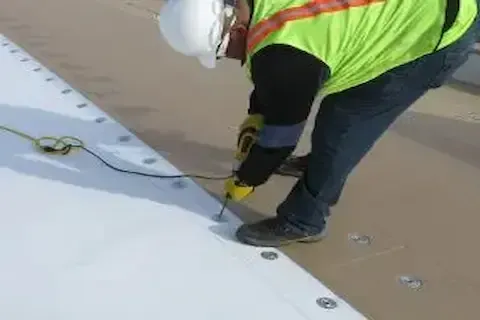
- Mechanically fastened: Fasteners driven through insulation into the deck hold the membrane at seams and edges. This is the most common method in Minnesota because it handles wind uplift reliably. Seams must be heat-welded to a minimum 1.5-inch width. Properly executed, this method supports a 20 to 25-year service life.
- Fully adhered: Bonding adhesive is applied across the full membrane surface. This eliminates fastener-point stress and reduces billowing under high wind, which is relevant during Maple Grove's spring storm season. It typically adds two to five years of seam integrity compared to mechanically fastened systems.
- Ballasted: River stone holds the membrane in place without fasteners or adhesive. It is low cost but adds significant dead load and requires ongoing stone redistribution. It is uncommon on newer Maple Grove buildings because most local structures are not designed for that load profile, and membrane displacement under ice load shortens service life to the 15 to 18-year range.
For a detailed comparison with the other dominant flat roof membrane in this market, see tpo vs epdm commercial to understand where each system wins on a Minnesota building.
How Does Minnesota's Climate Specifically Stress TPO Membranes?
Maple Grove averages more than 50 freeze-thaw cycles per year. Each cycle expands water trapped in seams or beneath the membrane, then contracts it, working seam edges apart over time. January low temperatures regularly drop below -15°F, which makes TPO temporarily rigid and brittle—any foot traffic or branch impact during this window can crack a membrane that would flex safely at 40°F. Summer surface temperatures on a white TPO membrane in direct sun can reach 140°F to 160°F, accelerating oxidation in lower-grade membranes. Hail events, which Maple Grove sees several times per decade at damaging size, are a known life-shortening factor on 45-mil sheets. Specifying the correct thickness for this climate is not an upsell—it is the difference between hitting year 15 and year 28 on the same installation cost basis.
What Maintenance Practices Extend TPO Lifespan?
Annual inspection is the highest-leverage action available to a Maple Grove building owner. A qualified roofer checks seam integrity, flashing adhesion at penetrations and curbs, drainage flow at interior drains and scuppers, and membrane surface condition. Identifying a lifted seam or cracked pitch pocket in year three costs hundreds of dollars to repair. Left until year eight, the same failure allows water infiltration that damages insulation, decking, and interior finishes—costs that routinely reach five figures. Keeping interior drains clear of debris prevents ponding, which is a code concern under Minnesota energy code and a direct cause of premature membrane degradation. HVAC contractors and other trades accessing the roof should use walkway pads, which protect the membrane surface from repeated foot traffic damage at the same path.
What Warranties Apply to TPO Roofing in Maple Grove?
Manufacturer warranties on TPO systems range from 10 to 30 years depending on membrane grade and installer certification status. A 15-year NDL (no-dollar-limit) warranty covers both materials and labor for qualifying installations. To access the longest warranty terms, the installing contractor must be certified by the membrane manufacturer. Workmanship warranties from the contractor run separately, typically covering two to five years on seams and flashing details. When evaluating bids, confirm both the manufacturer warranty term and the contractor's workmanship coverage—these two documents together define your actual financial protection if a failure occurs before the membrane reaches end of life.
If you are planning a new installation or evaluating an existing flat roof, TPO Roofing Installation covers the full installation process, thickness recommendations for Maple Grove building types, and what to expect at each project phase.
When Should a Maple Grove Building Owner Replace Rather Than Repair?
Repair is the right call when damage is isolated—a single failed seam, a cracked flashing detail, or a puncture from storm debris. Replacement becomes the correct decision when seam failures are appearing across multiple roof sections, when insulation has absorbed moisture in large areas confirmed by infrared scan, or when the membrane age exceeds 20 years and repair frequency is increasing. A professional moisture scan of the existing roof deck gives a reliable picture of how much of the system is still performing. If more than 25 percent of the insulation area is wet, replacement typically has a better cost-per-year outcome than continued repair on an aging membrane.
