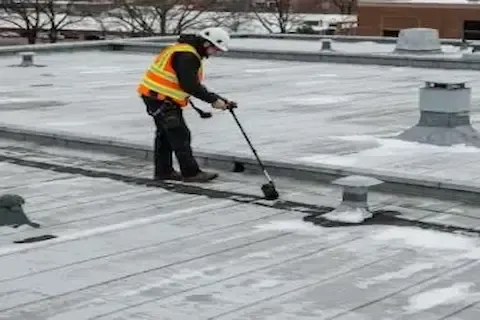
How Often Should a Flat Roof Be Inspected Maple Grove
Flat roofs on commercial buildings in Maple Grove, MN should be inspected a minimum of twice per year — once in spring after the freeze-thaw cycle and once in fall before winter weather sets in. Buildings over 10 years old, those with HVAC equipment on the roof, or properties that have experienced recent storm damage benefit from quarterly inspections. A licensed roofing contractor familiar with Minnesota's climate conditions should perform each inspection. Between scheduled visits, specific trigger events — heavy snow loads, hail, pooling water, or visible interior leaks — should prompt an immediate additional inspection.
How Many Times Per Year Should a Flat Roof Be Inspected?
The industry standard for commercial flat roofs is two professional inspections per year. In Maple Grove and the broader Hennepin County area, the spring inspection matters most because winter puts significant stress on roofing membranes. Freeze-thaw cycles cause expansion and contraction that can open seams, crack flashing, and accelerate membrane deterioration. The fall inspection prepares your roof to handle snow accumulation and ice damming before temperatures drop. If your building has had previous repairs, active warranties, or rooftop equipment like HVAC units or solar panels, your contractor may recommend moving to a quarterly schedule.
What Trigger Events Should Prompt an Unscheduled Inspection?
Some conditions require you to call for an inspection outside your regular schedule. Do not wait for your next scheduled visit if any of the following occur:
- Hail or severe wind events — Maple Grove experiences significant hail seasons, and even quarter-sized hail can puncture TPO and EPDM membranes without leaving obvious visible damage from ground level.
- Heavy snow accumulation — Flat roofs have weight limits. When snowfall is unusually heavy or when ice dams form at drains or parapets, an inspection confirms whether structural stress or water intrusion has occurred.
- Interior water staining — Any discoloration on ceiling tiles, walls near the roofline, or around roof penetrations is a clear signal that something has failed.
- Standing water after rain — Flat roofs should drain within 48 hours. Ponding water beyond that accelerates membrane breakdown and adds significant weight load.
- Recent HVAC or equipment work — Any time a contractor accesses your roof to service mechanical equipment, a follow-up roof inspection verifies that penetrations and flashings were not disturbed.
Why Does Inspection Frequency Matter for Maple Grove Buildings Specifically?
Minnesota's climate is harder on flat roofs than almost any other region in the country. Maple Grove properties face temperature swings from below zero in January to above 90 degrees in July. That range puts repeated mechanical stress on roofing materials that simply does not occur in moderate climates. The soil conditions in this part of Hennepin County also contribute to building movement over time, which can affect how a flat roof performs at connection points with the building structure. Inspections catch these localized problems early, before they become full membrane failures requiring Commercial Roof Inspection Services under emergency conditions or forcing unplanned capital expenditures on a full replacement.
What Does a Professional Flat Roof Inspection Cover?
A proper commercial flat roof inspection is not a visual scan from the parking lot. A qualified inspector examines all of the following:
- Membrane condition — Looking for blistering, shrinkage, punctures, and seam separation across the entire roof field
- Flashing integrity — Checking all perimeter edges, penetration flashings around pipes and vents, and parapet wall terminations
- Drainage systems — Confirming internal drains, scuppers, and gutters are clear and functioning correctly
- Rooftop equipment interfaces — Inspecting curbs, pitch pockets, and any penetration point where equipment meets the roof membrane
- Insulation performance — Using infrared scanning or moisture probes on older roofs to detect wet insulation that is not visible to the naked eye
- Documentation — Providing a written report with photographs that creates a baseline record for warranty claims, insurance purposes, and capital planning
That documentation becomes valuable if you ever need to file a hail or wind claim with your commercial property insurer, or if you are planning a phased restoration rather than an immediate full replacement.
How Does Inspection History Affect Replacement Decisions?
Regular documented inspections give you a clear picture of your roof's remaining service life. Most commercial flat roofing systems in Maple Grove have a practical lifespan of 15 to 25 years depending on the membrane type, installation quality, and how well the roof was maintained. Without inspection records, you are guessing. With them, you can see the rate of deterioration and plan your budget accordingly. For more context on how regional conditions specifically affect roofing decisions across this area, reviewing the hennepin county commercial roof resource will give you a broader picture of what local contractors see most frequently.
Inspection records also matter if you are purchasing or selling a commercial property. A building with two documented annual inspections over the past five years presents considerably less risk to a buyer or lender than one with no maintenance history at all.
What Should You Do If an Inspection Reveals Problems?
Not every inspection finding requires an immediate large repair. Many issues caught early — a small seam separation, a slightly clogged drain, minor flashing lift — are inexpensive to correct if addressed promptly. The cost difference between a minor repair and a full section replacement is often ten to one or greater. If your inspector identifies widespread membrane deterioration or systemic drainage problems, they should provide you with a written scope of work that distinguishes between immediate safety concerns, near-term repairs, and items to monitor in subsequent inspections. That tiered approach helps you allocate your maintenance budget rationally rather than reacting to emergencies.
