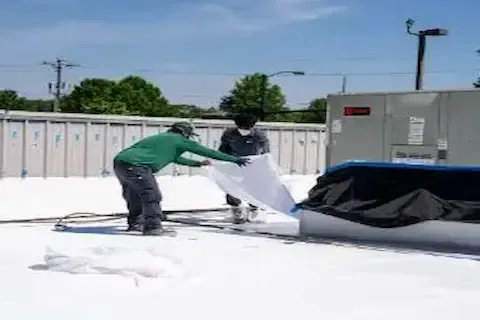
Leak Detection on Maple Grove Commercial Flat Roofs
Water damage from a leaking commercial flat roof can cost Maple Grove businesses thousands of dollars in repairs and lost productivity. Finding the exact source of that leak requires a systematic approach that goes far beyond looking for obvious wet spots on your ceiling tiles.
Understanding Water Migration Patterns
Water rarely travels straight down through a flat roofing system. Instead, it follows the path of least resistance, often moving horizontally along roof decking, insulation layers, or structural elements before finding a way through to your building's interior. This means the wet spot you see inside your Maple Grove facility could be several feet away from the actual roof penetration.
Professional roof inspectors start by mapping the interior damage, then work backward to trace the water's journey. They examine the building's structural layout, HVAC placement, and roofing membrane seams to understand how water might migrate from its entry point to where you're seeing the evidence.
Temperature differentials also affect water movement. During Minnesota's cold months, ice damming can redirect water flow patterns, causing leaks to appear in unexpected locations. Understanding these seasonal variations helps narrow down potential source areas on your commercial roof.
Systematic Roof Surface Inspection
A thorough leak detection process begins with a comprehensive roof surface examination. Inspectors look for obvious signs like punctures, tears, or separated seams in the roofing membrane. However, many leaks originate from more subtle issues that require trained eyes to identify.
Membrane blistering indicates moisture trapped beneath the surface, which can eventually lead to ruptures. Ponding water areas show where drainage problems exist, creating long-term stress on roofing materials. These chronic wet zones often develop into leak points during freeze-thaw cycles common in the Twin Cities region.
Penetration points deserve special attention during inspection. Roof drains, HVAC units, exhaust vents, and other equipment create potential entry points for water. Commercial Roof Repair specialists examine the flashing and sealing around each penetration, looking for gaps, deterioration, or improper installation that could allow water infiltration.
Parapet walls and roof edges also require careful examination. Wind-driven rain can exploit small gaps in these areas, especially when combined with Minnesota's severe weather patterns. Inspectors check coping stones, metal flashing, and membrane terminations along these critical boundary areas.
Advanced Detection Methods
When visual inspection doesn't reveal the leak source, professional contractors employ specialized detection equipment. Infrared thermography identifies temperature differentials that indicate wet insulation or trapped moisture within the roofing system. This non-invasive method can pinpoint problem areas without requiring destructive testing.
Electronic leak detection uses electrical conductivity to locate moisture pathways. Since water conducts electricity while dry roofing materials don't, this method can trace the exact route water takes through your roof system. This precision helps minimize repair costs by targeting only the affected areas.
Nuclear moisture scanning provides another layer of detection capability. This method measures hydrogen atoms present in water molecules, creating detailed moisture maps of your entire roof system. For large commercial facilities in Maple Grove, this comprehensive approach ensures no hidden problems go undetected.
Common Problem Areas
Certain areas of commercial flat roofs experience higher failure rates due to design constraints and environmental stresses. Roof drains and their surrounding areas see constant water exposure, making them prime candidates for leak development. Poor drainage design or debris accumulation can cause water to back up and find alternative pathways into your building.
Equipment curbs and penetrations create natural weak points in the roofing membrane. HVAC units, especially those that vibrate during operation, can gradually work loose their sealing over time. Regular maintenance of these connections prevents small problems from becoming major leaks.
Seam failures represent another common leak source. As roofing membranes age, the adhesive or welded joints between sections can separate. High winds, temperature cycling, and normal building movement all contribute to seam stress over time.
Professional vs. DIY Detection
While building maintenance staff can identify obvious leak sources, professional detection offers significant advantages for complex problems. Experienced contractors understand how different roofing systems fail and where to look for specific types of problems. They also have access to specialized equipment that can detect issues invisible to visual inspection.
Professional leak detection often saves money in the long run by identifying all problem areas at once, rather than addressing symptoms as they appear. commercial roof repair in Maple Grove becomes more cost-effective when you address root causes rather than repeatedly patching individual leaks.
Documentation provided by professional inspections also supports insurance claims and helps plan long-term maintenance budgets. Detailed reports show the extent of damage and provide recommendations for both immediate repairs and preventive measures.
Local Weather Considerations
Minnesota's climate creates unique challenges for commercial flat roof leak detection. Ice and snow cover can mask leak sources for months, allowing problems to worsen before they're discovered. Spring thaw often reveals multiple leak points that developed during the winter freeze-thaw cycles.
Heavy summer rainfall can overwhelm drainage systems, creating temporary leak conditions that don't appear during normal weather. Understanding these seasonal patterns helps building owners time their inspections for maximum effectiveness.
Wind patterns in the Maple Grove area also influence leak development. Prevailing winds can drive water into areas that wouldn't normally see moisture infiltration, making leak detection more complex during certain weather conditions.
Prevention Through Early Detection
Regular leak detection inspections prevent minor issues from becoming major problems. Scheduled inspections after severe weather events catch new damage before it compromises your building's interior. This proactive approach maintains your roof's protective function and extends its overall lifespan.
Establishing baseline condition reports helps track changes in your roof system over time. Comparing current conditions to previous inspections reveals developing problems and helps prioritize maintenance resources effectively.
