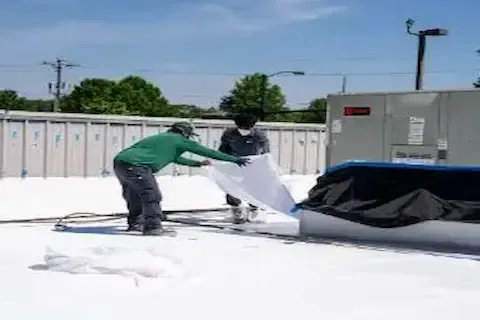
Commercial Roof Repair in Maple Grove MN Walkthrough
When your commercial property in Maple Grove experiences roofing issues, the decisions you make in the first 24-48 hours often determine whether you're looking at a simple repair or a costly emergency replacement. Understanding the proper assessment and response sequence helps property managers, business owners, and facility directors navigate from initial damage discovery through professional resolution.
Initial Damage Assessment and Safety Response
Your first priority involves securing the immediate area and preventing further damage to interior spaces and equipment. Start by documenting visible damage with photographs from multiple angles, noting the date, time, and weather conditions. If water is actively entering the building, position buckets or tarps to protect inventory, electronics, and flooring while maintaining safe access routes for occupants.
Check your building's electrical systems in affected areas, as water intrusion near lighting fixtures, outlets, or HVAC equipment creates serious safety hazards. Contact your insurance carrier within the first few hours to report the claim and understand your coverage parameters. Many commercial policies in Minnesota require prompt notification, and delays can complicate claim processing.
Professional Commercial Roof Repair contractors typically offer emergency response services for Maple Grove businesses, providing temporary weatherproofing while permanent repairs are planned. This immediate protection prevents secondary damage that could expand a localized repair into a building-wide restoration project.
For more on this, see our post on what to do about an active commercial roof leak.
Categorizing Damage Severity and Repair Scope
Commercial roofing damage falls into distinct categories that require different response strategies and investment levels. Surface-level issues include minor membrane punctures, loose flashing, or small areas of deteriorated coating that haven't yet compromised the underlying structure. These repairs often involve patching, sealing, or localized membrane replacement that can be completed within one to two business days.
Moderate damage encompasses larger membrane tears, failed seams, or compromised insulation in specific roof sections. This category typically requires removing damaged materials, replacing insulation layers, and installing new membrane sections that integrate with existing roofing systems. The repair process may take several days and require coordination with building operations to minimize tenant disruption.
Extensive damage involves structural compromise, widespread membrane failure, or saturated insulation across significant roof areas. These situations often require partial or complete roof system replacement, involving structural repairs, new insulation installation, and comprehensive membrane systems. The timeline extends to weeks rather than days, requiring detailed project planning and temporary protection measures.
Weather-Related Damage Patterns in Maple Grove
Minnesota's climate creates specific damage patterns that commercial property owners should recognize when assessing repair needs. Spring storms frequently cause hail damage that appears as small punctures or cracks in membrane surfaces, while high winds can lift membrane edges or tear flashing connections around roof penetrations and perimeter areas.
Winter ice dam formation affects commercial buildings differently than residential properties, often creating pressure points where membrane systems meet parapet walls or drainage areas. The freeze-thaw cycles common in the Twin Cities area cause expansion and contraction that can open seams or create stress fractures in aged roofing materials.
Summer heat exposure accelerates membrane aging and can cause thermal shock when sudden storms bring temperature drops of 30-40 degrees within minutes. This rapid temperature change stresses roofing materials and can reveal underlying weaknesses that require immediate attention to prevent progressive failure.
Professional Inspection and Diagnosis Process
Qualified roofing contractors follow systematic inspection protocols that examine both visible damage and underlying conditions that may not be immediately apparent. Core samples help determine insulation moisture content, while infrared scanning reveals thermal bridges or wet areas that indicate membrane breaches not visible from the surface.
The inspection process includes evaluating roof system components beyond the membrane itself, examining flashing conditions, drainage functionality, and structural elements that support the roofing assembly. Contractors assess whether existing conditions meet current building codes and energy efficiency standards, identifying opportunities for improvements during repair work.
Professional inspections also evaluate the remaining service life of undamaged roof areas, helping property owners understand whether isolated repairs make financial sense or if comprehensive replacement provides better long-term value. This analysis becomes particularly important for roofing systems approaching 15-20 years of age.
Repair Methods and Material Selection
Modern commercial roof repair utilizes advanced materials and techniques that often surpass the performance of original installations. Single-ply membrane repairs can incorporate reinforced patches, liquid-applied coatings, or heat-welded seams that create permanent bonds stronger than surrounding materials.
Built-up roofing repairs may involve removing damaged sections down to the structural deck, replacing insulation, and rebuilding the membrane system using improved materials and installation methods. Modified bitumen systems allow for torch-applied patches or cold-applied materials depending on building occupancy and safety requirements.
Liquid-applied roofing systems provide seamless repair solutions for complex roof geometries or areas with multiple penetrations where traditional membrane materials prove difficult to install properly. These systems cure to form monolithic membranes that eliminate seam-related failure points common in mechanical fastening systems.
Cost Considerations and Budget Planning
Commercial roof repair costs in Maple Grove vary significantly based on damage extent, material selection, and access requirements. Simple membrane patches typically range from $300-800 per occurrence, while section replacement projects can reach $8-15 per square foot depending on the roofing system type and complexity.
Emergency repairs command premium pricing due to immediate response requirements and potential overtime labor costs, but this investment often prevents much larger expenses associated with interior damage, business interruption, or progressive roof deterioration. Property owners should maintain emergency repair budgets of 2-3% of building value to address unexpected roofing issues promptly.
Insurance coverage analysis becomes crucial for determining out-of-pocket expenses and repair scope decisions. Commercial policies may cover sudden damage but exclude maintenance-related issues, making proper documentation and professional assessment essential for maximizing claim settlements while ensuring complete repairs.
Timeline Management and Business Continuity
Effective commercial roof repair requires careful coordination with building operations to minimize tenant disruption and maintain business continuity. Repair scheduling should consider weather windows, as most roofing work requires dry conditions for proper installation and curing of materials.
Multi-phase repair approaches allow continued building operation during extensive projects by completing work in sections while maintaining weather protection over occupied areas. This strategy proves particularly important for retail centers, office buildings, or manufacturing facilities that cannot afford extended closures.
Communication with tenants, employees, and customers helps manage expectations and maintain relationships during repair projects. Property managers should provide regular updates about project progress, access restrictions, and completion timelines while coordinating with contractors to minimize noise and disruption during peak business hours.
Prevention and Long-Term Maintenance Strategy
Professional repairs provide opportunities to implement improved maintenance protocols that extend roof system life and reduce future repair frequency. Regular inspection schedules, prompt attention to minor issues, and proactive maintenance contracts help identify problems before they require emergency response and major repairs.
Documentation from repair projects creates valuable baselines for future maintenance planning and insurance purposes. Detailed records of materials used, warranty coverage, and system performance help property owners make informed decisions about ongoing maintenance investments and eventual replacement timing.
Understanding that hoa and multi-family roofing systems face similar challenges can help commercial property owners learn from residential maintenance approaches while adapting strategies for larger-scale commercial applications. The key lies in developing systematic approaches that address both immediate repair needs and long-term asset protection goals.
