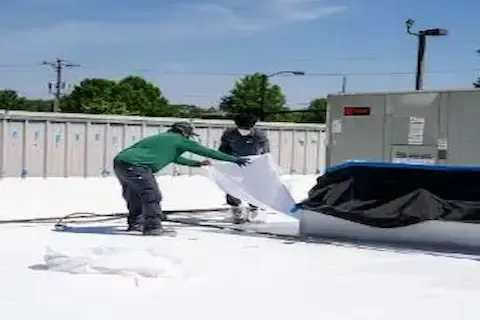
Storm Damage Commercial Roof Repair in Maple Grove MN
Minnesota storm season does not negotiate. When a severe cell sweeps through Hennepin County, hail the size of quarters can punch through TPO membranes, sustained winds can lift metal edge flashings, and standing water from overwhelmed drains can compromise the entire insulation layer beneath a flat roof deck. For Maple Grove business owners and property managers, the hours immediately following a storm are often the most consequential — decisions made in that window determine whether a repair stays a repair or escalates into a full replacement.
What Minnesota Storms Actually Do to Commercial Flat Roofs
Commercial roofing systems in the Maple Grove area face a specific combination of threats that differ from residential sloped roofs. TPO and EPDM membranes are durable under normal conditions, but hail impact at high velocity creates bruising that may not be immediately visible. The membrane surface may appear intact while the underlying insulation board has absorbed a concentrated blow. Over the following weeks, that damaged insulation absorbs moisture, loses its R-value, and begins to degrade the decking beneath it.
Wind damage follows a different pattern. At properties along Highway 610 or near the retail corridors off Main Street, edge metal flashings experience uplift forces that can break the bond between the flashing and the membrane. Once that seal is compromised, water migrates laterally under the membrane — sometimes traveling several feet from the visible damage point before it shows up as an interior ceiling stain.
Ponding water is the third threat. After a heavy rainfall event, flat roofs with clogged or inadequate drains retain water that weighs roughly five pounds per gallon per square foot. That load stresses the deck structure and accelerates membrane breakdown at any point where the surface was already weakened by hail or UV exposure.
Triage Before You Call Insurance
The first step after any significant storm is a documented visual inspection from ground level. Walk the perimeter and look for visible flashing displacement, membrane wrinkles or bubbling along parapet walls, and debris accumulation over drains. Do not attempt a roof-level inspection without proper fall protection — commercial flat roofs are slippery after rain and often retain pooled water in low spots that are not obvious from the edge.
Photograph everything from the ground, including neighboring buildings and landscaping damage. Insurance adjusters use comparative evidence. If trees in the Maple Grove Business Park adjacent to your property lost limbs, that visual context supports your hail or wind claim. Document the date and time of the storm with a screenshot from a weather service showing the event record for your zip code.
Contact a qualified commercial roofing contractor before you file the claim. An experienced contractor can walk the roof safely, identify the full scope of storm-related damage, and prepare documentation that separates storm damage from pre-existing wear. This distinction matters because insurers will attempt to attribute as much damage as possible to normal aging in order to reduce the payout. Commercial Roof Repair performed by a contractor who understands the claims process creates a stronger evidentiary record from the start.
Prioritizing Repairs That Protect the Warranty
Most commercial roofing warranties contain a provision requiring the building owner to take prompt remedial action after a loss event. If you allow a known breach — a puncture, a lifted flashing, an open seam — to remain unaddressed while waiting for the insurance settlement, the manufacturer may deny warranty coverage on the grounds that the damage was worsened by neglect.
Emergency tarping or temporary patching over confirmed breach points is a reasonable interim measure. Any contractor you work with should document that the emergency repair is temporary and storm-related, not a permanent repair that could complicate the final scope of work. This documentation should be shared with both the insurance adjuster and the roofing manufacturer's warranty representative.
When the full repair scope is confirmed, prioritize in this order: open penetrations and confirmed breaches first, flashing and edge metal second, and membrane surface repairs third. Interior moisture intrusion should be tracked with a moisture scan — infrared or nuclear — before any surface repairs are made, so that saturated insulation is identified and replaced rather than sealed over.
Common Mistakes Maple Grove Property Managers Make After Storm Events
Waiting too long is the most common error. A three-week delay between storm event and professional inspection routinely results in moisture that has migrated beyond the initial impact point, turning a localized repair into a large section replacement. In the Maple Grove climate, late summer storms are often followed immediately by cooler temperatures, which means trapped moisture begins freeze-thaw cycling within weeks.
Hiring a residential roofer for a commercial system is a close second. Residential contractors understand sloped shingle systems. Commercial TPO, EPDM, and built-up roofing require different tools, techniques, and warranty knowledge. An improper seam weld or incompatible patching material can void manufacturer coverage on the entire roof assembly, not just the repaired section.
Skipping the moisture scan and simply patching visible damage is the third mistake. Surface repairs over saturated insulation trap moisture against the deck indefinitely. Within one to two freeze-thaw cycles, that moisture expands and contracts, breaking the bond between the membrane and the insulation board across a much larger area than the original breach.
Working with the Local Insurance Landscape
Hennepin County commercial properties are served by a range of regional and national carriers, and claim experiences vary significantly. Some adjusters assigned to Maple Grove properties are familiar with the local hail frequency and move quickly. Others apply national averages that underestimate regional storm severity. Having a contractor-prepared damage report with specific measurements, photographs, and material specifications puts you in a stronger negotiating position regardless of which adjuster is assigned.
Supplemental claims are common in storm-heavy years. If the initial settlement does not cover the full documented scope, a qualified contractor can prepare a supplement with updated measurements and current material pricing. For more context on navigating the full commercial roof situation after a storm, see this overview of to do about commercial roof issues in the Maple Grove area.
Protecting the Building Going Forward
Storm damage repair is an opportunity to address deferred maintenance items that may have been contributing factors. Drain covers that were already slow, membrane seams that were beginning to lift, and flashings that had lost adhesion are all items that worsen storm outcomes. A reputable contractor will note these in the repair documentation, allowing you to address them either as part of the current claim or as a planned maintenance item before the next storm season arrives.
Maple Grove commercial property owners who establish a relationship with a qualified roofing contractor before storm season are better positioned to respond quickly when events occur. Emergency response times, familiarity with the building's existing system, and existing documentation of pre-storm conditions all improve claim outcomes and reduce total repair costs over time.
