What to Do About a Commercial Roof Leak Maple Grove MN
When a commercial roof is actively leaking in Maple Grove, MN, act fast: move inventory and equipment away from the leak, place containment buckets, and document everything with photos for your insurance claim. Shut off any electrical panels directly below the water intrusion. Call a licensed commercial roofing contractor immediately — many offer emergency response for active leaks. If standing water is pooling on your flat roof, a temporary tarp or emergency drain clearing may be needed. Do not wait for the rain to stop before calling. Water moves laterally under membrane roofing, so the visible drip is rarely directly below the actual breach.
What Are the First Steps When a Commercial Roof Is Actively Leaking?
Your first priority is protecting the interior. Move any merchandise, equipment, servers, or sensitive materials away from the affected area immediately. Place heavy-duty buckets or plastic totes under active drips. Lay down absorbent tarps or plastic sheeting to protect flooring. If the leak is directly above an electrical panel, breaker box, or exposed wiring, shut off power to that circuit before water reaches it — this is a life-safety issue. Once the interior is protected, photograph and video everything before you clean it up. Your insurance carrier will need documentation of the damage as it occurred, not after you've mopped up.
Should You Go on the Roof Yourself During Active Rain?
No. A wet commercial flat roof — especially a TPO, EPDM, or built-up surface — becomes extremely slippery and dangerous. Beyond the slip hazard, walking on a saturated membrane without knowing where structural weakness exists puts you at risk of falling through compromised decking. More practically, untrained inspection often causes additional damage to the membrane that complicates the repair and potentially voids manufacturer warranties. Leave the roof access to a licensed contractor equipped with proper fall protection. Your job during active weather is interior containment, documentation, and getting a professional on the phone.
When Does an Emergency Tarp Make Sense for a Commercial Building?
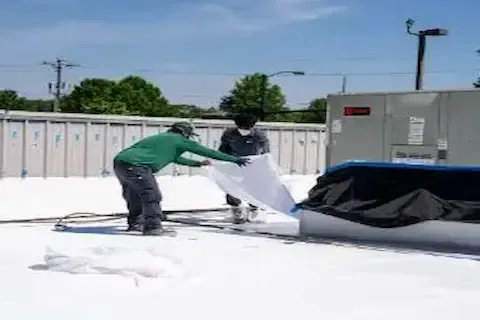
Emergency tarping is appropriate when a storm has caused sudden, widespread membrane damage — torn seams, punctures from wind-driven debris, or displaced flashing that is allowing large volumes of water in. It is also appropriate when a contractor cannot get to your building same-day and the rain is forecast to continue. A properly installed emergency tarp covers the breach area and is weighted or fastened to prevent wind lift. It buys you 48 to 72 hours of protection. For Maple Grove commercial buildings, which frequently deal with hail events and high-wind spring storms, having a contractor you can call for same-day emergency response is worth establishing before a crisis occurs.
How Do You Find Where the Actual Leak Originated?
Flat roofing systems are deceptive. Water that enters through a membrane breach can travel 10 to 20 feet horizontally through insulation layers before it drips through the ceiling. This means the visible ceiling stain is almost never directly beneath the entry point. A professional contractor will use a combination of visual inspection, electronic leak detection, and sometimes infrared scanning to locate the true breach. For Maple Grove property owners who want to understand this process in more detail, our post on leak detection on commercial flat roofs explains the methods contractors use to trace water back to its source.
What Should You Tell Your Insurance Company Right Away?
Call your commercial property insurer immediately after you have secured the interior. Provide your policy number, a description of the damage, and the date and time the leak was first noticed. Ask specifically whether your policy covers emergency mitigation costs — many commercial policies reimburse temporary tarping and water extraction when done by licensed contractors. Request a claim number and ask what documentation they require. Photos, video, contractor estimates, and a written damage report from a licensed roofer are typically required before a claims adjuster visits. Do not sign any contractor's contract that requires you to assign your insurance benefits to them without reading it carefully and consulting your agent.
How Quickly Should a Commercial Roof Leak Be Permanently Repaired?
As quickly as possible — ideally within days of the emergency tarp going on. Every day that moisture sits in your insulation layer accelerates deterioration of the roof deck below. In Minnesota winters, water trapped in roofing insulation freezes and expands, widening membrane separations and turning a small repair into a large-scale replacement. Maple Grove's freeze-thaw cycle is particularly aggressive from November through March, which means a leak that goes unrepaired heading into fall can cost several times more to fix in spring. Commercial Roof Repair performed promptly after a leak is almost always significantly less expensive than the structural repair work that follows prolonged moisture intrusion.
What Can You Do to Prevent This From Happening Again?
The most effective prevention for commercial flat roofs in Maple Grove is a scheduled twice-yearly inspection — once in spring after the freeze-thaw season and once in fall before temperatures drop below freezing. Inspections should specifically address seam integrity, flashing conditions around HVAC penetrations, and drain clearing. Clogged roof drains are one of the most common causes of ponding water, which accelerates membrane breakdown. Resealing flashings and addressing minor seam separations proactively costs a fraction of emergency repairs. Ask your contractor for a written inspection report with photos after each visit so you have documentation for your insurance file and a maintenance record if you ever sell the property.
