Winter Commercial Roof Inspection Snow Load Maple Grove
Minnesota winters are unforgiving to flat and low-slope commercial roofs, and Maple Grove properties face some of the most demanding freeze-thaw cycles in the region. Snow accumulates quietly, ice dams form at parapet edges, and standing water refreezes overnight into something far more dangerous than the original storm left behind. By the time a ceiling tile shows a water stain or a seam separates visibly from the ground, the damage has usually been progressing for weeks. A disciplined winter inspection routine is the single most effective way to stay ahead of those costs and protect the long-term integrity of your building envelope.
Why Snow Load Is the Central Winter Concern for Maple Grove Commercial Roofs
Minnesota's design snow load standards are not arbitrary numbers. They reflect decades of recorded storm data across the state, and Hennepin County properties like those in Maple Grove are built to handle specific pounds per square foot of accumulated snow. The problem is that real storms do not always distribute weight evenly. Drifting caused by rooftop mechanical equipment, parapet walls, and adjacent building structures can push snow depth in specific zones two or three times higher than the open field average. A modest twelve-inch snowfall on a large warehouse or retail center can represent tens of thousands of pounds of added load once drifting is factored in.
Flat and low-slope roofs are particularly vulnerable because they offer no natural shedding angle. The snow simply sits. If your drainage system is even partially compromised going into winter, the weight problem is compounded by water that cannot escape. When temperatures drop hard overnight, that trapped water expands as ice and forces open seams and membrane laps that were already fatigued. This combination of mechanical stress and freeze-thaw cycling accelerates aging faster than any other seasonal condition your roof encounters.
What a Winter Field Inspection Should Cover
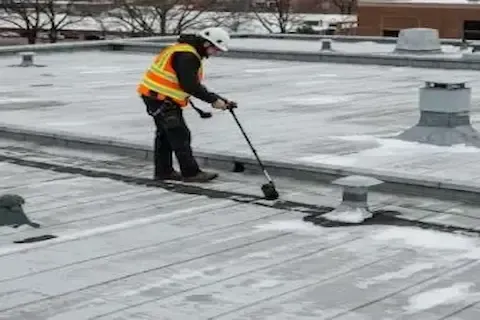
A qualified winter inspection is not a casual visual pass from the parking lot. It involves physical access to the roof surface and a structured sequence of observations designed to catch problems before they become failures. The following areas demand attention every season.
- Drainage points and interior drains: Check that all drains are clear of debris and ice. Blocked interior drains are among the most common causes of ponding water and structural overload on Maple Grove commercial roofs.
- Parapet and edge conditions: Ice damming along parapet walls and metal edge flashings traps meltwater on the roof surface. Inspect coping cap connections and sealant integrity at all parapet transitions.
- Membrane seams and field laps: Cold temperatures make membrane material brittle. Any seam that was borderline in fall becomes a legitimate failure point under winter stress. Look for lifting edges, bubbling, or visible separation.
- Penetration flashings: HVAC curbs, pipe boots, and skylight frames are the most common entry points for water. Confirm that counter-flashings are seated and that sealant has not cracked from thermal movement.
- Structural deflection signs: If you observe standing water in areas that were previously flat, or if interior ceilings show new deflection or cracking, those are signals that the structural deck itself may be responding to excessive load or long-term moisture infiltration.
For Maple Grove properties with large footprints — distribution centers, big-box retail, multi-tenant office buildings — the inspection should be divided into zones with documentation at each location. A single photo log taken after every significant snow event creates a comparison record that makes detecting changes over time far more reliable than memory alone.
Timing Your Inspections Around Minnesota Weather Patterns
The upper Midwest does not deliver one clean winter season. Maple Grove typically experiences multiple storm cycles between November and March, with thaw periods sandwiched between cold snaps. Each thaw-refreeze sequence is an independent stress event for your roofing system. This means a single pre-winter inspection is not sufficient on its own.
A practical seasonal schedule looks like this: a pre-winter baseline inspection before the first significant snowfall, a mid-season check after the first major accumulation event, and a post-winter assessment in early spring before the heavy melt season begins. If your building receives a storm that deposits more than eight to ten inches at once, that event alone justifies an unscheduled inspection regardless of where it falls in your calendar. The cost of a professional visit is negligible compared to the emergency repair bill that follows a missed load event.
Understanding often should flat roof inspections be scheduled gives you a framework for turning reactive habits into a proactive maintenance plan that accounts for seasonal demands specifically.
Common Mistakes Maple Grove Building Owners Make in Winter
The most frequent error is treating winter as a dormant period for roof maintenance. Many property managers assume that because roofing work slows down in cold weather, inspection and monitoring should also pause. That assumption gets expensive. Snow and ice are active forces working against your roof system every single day of accumulation.
A second common mistake is manual snow removal without professional guidance. Untrained crews with metal shovels can puncture single-ply membrane systems in a matter of minutes. If snow removal is necessary to address a load concern, it should be performed by roofing professionals using plastic shovels or foam-tipped tools, leaving a minimum two-inch buffer above the membrane surface to avoid contact damage.
A third mistake is ignoring interior warning signs. Water stains on drop ceilings, frost forming on interior roof decks in cold storage areas, and the smell of mold or mildew in upper-floor spaces are all indicators that the exterior barrier has already been compromised. Interior symptoms often appear well after the leak origin point has been active, so acting on them immediately rather than monitoring them is always the right call.
The Professional Inspection Advantage in Cold Conditions
There are inspection tasks that are simply not practical or safe for building staff to perform in winter conditions. Roof surfaces covered in snow or ice are slip hazards. Identifying membrane damage beneath snow requires techniques and experience that go beyond a facilities walk. Thermal imaging, when conditions allow, can reveal moisture trapped in insulation layers that would be invisible to the naked eye regardless of conditions.
Working with Commercial Roof Inspection Services that understand the specific demands of Minnesota winters means your inspection results in actionable documentation rather than a general opinion. A detailed written report with photographs, location coordinates, and prioritized recommendations gives you the evidence you need for budget conversations, insurance documentation, and contractor scheduling.
Protecting Your Investment Through the Season
Commercial roofing in Maple Grove is a long-term asset management challenge, not just a maintenance line item. The buildings along Bass Lake Road, around the Elm Creek commercial corridors, and throughout the industrial parks north of Highway 169 all share the same exposure to Hennepin County winters. Owners and property managers who build consistent inspection habits into their winter operations calendar consistently see lower emergency repair frequency, longer membrane service life, and stronger outcomes when re-roofing timelines need to be justified to ownership or investors. The snow will keep coming. The question is whether you are watching it closely enough to respond before it becomes a structural problem.
