
Champlin Commercial Flat Roof Services Across Every Construction Era
Commercial Flat Roof Replacement for Champlin Buildings
Commercial buildings along Champlin's Highway 169 corridor span multiple construction eras, with properties from the 1980s through the 2000s occupying the same service area. This age distribution creates a bifurcated flat roof market: older properties in or approaching their second replacement cycle alongside newer commercial construction entering the mid-life maintenance window for the first time. Both groups share Minnesota's climate demands but face different decision frameworks when it comes to roof system planning. Older properties from the 1980s and early 1990s that still carry original membrane systems are well past the designed service life of EPDM and BUR installations from that era. These buildings typically show accumulated flashing fatigue, seam degradation, and insulation moisture infiltration that has been progressing for years. The question for these buildings is rarely whether replacement is needed but whether the existing insulation and deck condition allow re-roofing or require full tear-off. Properties from the late 1990s and 2000s occupy a different window: original membrane systems that have been maintained may still qualify for extended service life through inspection and minor repair, or may qualify for coating applications where insulation and membrane condition meet the threshold. Properties in this range that have not been maintained are frequently carrying insulation moisture that was not visible at the surface but has been accumulating for years. Champlin commercial property owners with flat-roof buildings across either age group benefit from a current condition assessment that accurately characterizes where their specific building stands, rather than assumptions based on construction year alone. The inspection and assessment process is the foundation for every cost-effective roofing decision that follows.
Inspection and Repair for Champlin's Commercial Properties
Flat roof maintenance planning for Champlin commercial properties requires factoring in both building age and the history of maintenance activity, because these two variables together determine the actual condition of the roof system more accurately than either one alone. A well-maintained building from 1990 may present fewer replacement urgency indicators than a neglected building from 2005. The maintenance history also determines what options are available: buildings with documented inspection records are better positioned for re-roofing assessments, insurance claims, and warranty compliance than buildings with no service history. Minnesota's seasonal transition schedule — freeze-thaw stress accumulating through winter, drainage demands peaking in spring, UV degradation through summer, and freeze preparation required in fall — creates a year-round maintenance requirement on commercial flat roofs that does not pause because a building's original membrane is still within its warranty period. Champlin commercial properties on the Highway 169 corridor experience direct exposure to prevailing weather patterns that affect every flat-roof building in the northwest metro. Wind-driven rain events stress flashing details and drainage systems in ways that calm-weather performance cannot predict. Post-storm inspection is a standard protocol for commercial property managers who understand how their building's maintenance record intersects with insurance claim eligibility. A flat roof that has been inspected and documented within the past twelve months is in a fundamentally different position relative to a storm damage claim than one without current condition records. Establishing that record through a scheduled maintenance program costs a fraction of the claim value it protects and produces ancillary benefits through every other financial transaction the property undergoes during its ownership lifecycle.
Flat Roof Replacement and Re-Roofing in Champlin
Flat roof replacement in Champlin serves both replacement-cycle buildings from the 1980s and 1990s and first-generation replacement projects on commercial construction from the early 2000s. The approach to each group differs at the assessment stage but converges at the same standard for installation. Both require a physical inspection with core cut sampling before any system recommendation is made. Champlin's Highway 169 commercial corridor includes retail, service-commercial, and mixed-use properties that were developed in waves corresponding to the market's growth periods. Properties from the 1980s and early 1990s are candidates for either re-roofing or full replacement depending on insulation condition, deck status, and the number of membrane generations already installed. Buildings with a single generation of membrane and dry insulation can qualify for re-roofing with TPO or EPDM overlay. Buildings with moisture-compromised insulation or structural deck concerns require full tear-off regardless of surface condition. Properties from the late 1990s and 2000s that are at or approaching their first replacement face a different decision profile. Their deck and framing systems are in better condition than older commercial stock, which often produces lower full-replacement costs when tear-off is required, and better re-roofing eligibility when insulation is found to be dry. For all flat roof replacement projects in Champlin, TPO represents the highest-specified membrane option for new installations. Its heat-weld seam performance, Minnesota climate compatibility, and compatibility with rooftop HVAC accessories make it the dominant specification for Hennepin County commercial replacement projects. EPDM re-roofing applications remain appropriate for buildings with existing EPDM-compatible substrates and confirmed dry insulation.
Roof Repair and Emergency Leak Response
Commercial roof repair in Champlin covers a building stock with variable age and maintenance history that produces a wide range of repair complexity. Champlin's older commercial properties along Highway 169 carry flashing details that have experienced multiple decades of freeze-thaw cycling. Parapet wall flashing, HVAC curb flashings, and drain boots on these buildings have been worked by seasonal thermal movement every year of their service life. The most common repair category on these older buildings is flashing separation — either at parapet walls, at equipment curbs, or at the transition from the roof membrane to vertical surfaces. These failures are predictable and preventable with an inspection program that catches them before water enters the insulation layer. On newer Champlin commercial properties, repair work tends to concentrate around drainage system performance and original seam quality. Drain blockages on buildings with internal drains require clearing before each freeze season. Original seam quality on properties from the late 1990s and early 2000s varies by original contractor and installation conditions. Buildings where original seams were installed during marginal weather or with inconsistent heat-weld parameters may show seam stress failures earlier than the membrane's rated service life. Inspections that include seam integrity assessment across the full roof surface catch these issues before they develop into active leaks. Emergency repair response for Champlin commercial properties follows the same protocol across all building ages: same-day assessment and temporary waterproofing for active leaks, followed by permanent repair once the failure source is accurately located and the appropriate material and method are selected. Roof leaks that generate interior damage are handled on the same schedule as emergency service calls.
Scheduled Maintenance for Champlin Commercial Properties
Commercial roof maintenance across Champlin's mixed-age commercial building stock benefits from inspection programs that are tailored to building age rather than applied uniformly. Older properties from the 1980s and 1990s need maintenance protocols that prioritize flashing integrity at all penetrations and parapet walls, drain flow performance, and membrane surface condition at seams and field areas where UV degradation has had the most time to accumulate. Newer properties from the 2000s need maintenance protocols that focus on drainage system performance, original seam condition at HVAC curbs and penetrations, and parapet wall flashing details where thermal movement has been working the installation details for ten to twenty years. For all Champlin commercial properties, the maintenance schedule that produces the best outcomes is structured around Minnesota's seasonal transition points. Fall inspection covers drain clearing and membrane condition before the first freeze. Spring inspection covers any damage accumulated during winter freeze-thaw cycling. Both visits produce written condition reports with photographic documentation of any deficiencies found and repaired. These records serve as the compliance documentation for manufacturer warranty programs, the condition record for insurance claims, and the maintenance history that supports re-roofing eligibility assessments when replacement decisions become relevant. Commercial property owners in Champlin who have operated without documented maintenance programs are not in an unrecoverable position — establishing the program now creates the record going forward. Properties with no existing inspection history can be brought into a documented maintenance program with an initial comprehensive assessment that establishes baseline condition and identifies any existing deficiencies that should be addressed before routine maintenance begins. The initial assessment is the starting point for every building entering the program for the first time.
Comprehensive Commercial Roofing Contractor Services in Maple Grove
Tailored to Your Needs
Maple Grove commercial roofing services built for the specific demands of Hennepin County commercial properties. From retail corridor flat roof replacement to HOA community programs, maintenance schedules, and emergency repair response.
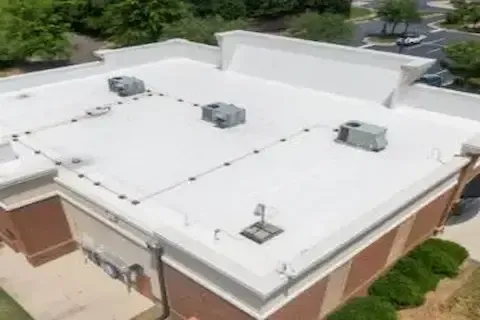
Maple Grove commercial flat roof replacement specialists serving retail, office, HOA, and multi-family properties across Hennepin County.
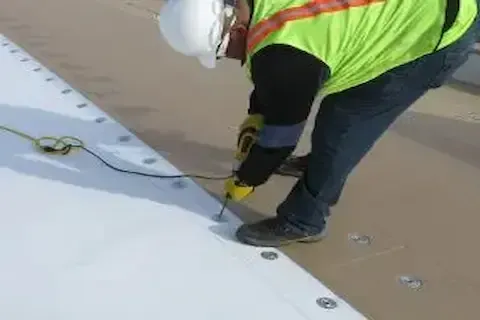
Minnesota-grade TPO membrane installation for commercial flat roofs in Maple Grove. Heat-weld seam integrity and energy efficiency for retail and office properties.

Rapid commercial roof repair for Maple Grove businesses. Membrane failures, flashing separations, and emergency leak response for Hennepin County commercial properties.
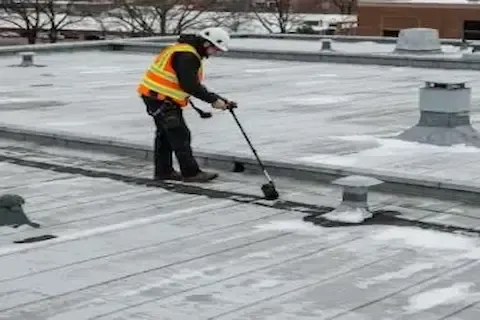
Comprehensive commercial roof inspections for Maple Grove property managers. Documented condition reports for insurance, warranty compliance, and maintenance planning.
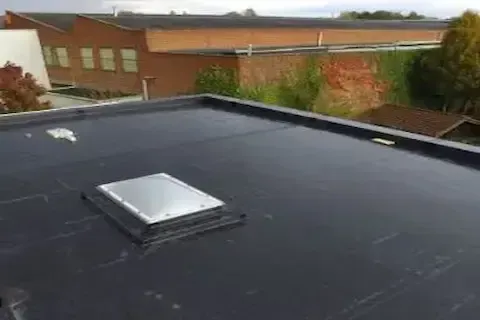
EPDM rubber roofing installation and replacement for Maple Grove's commercial building stock. The proven membrane system for re-roofing applications on Hennepin County commercial properties.
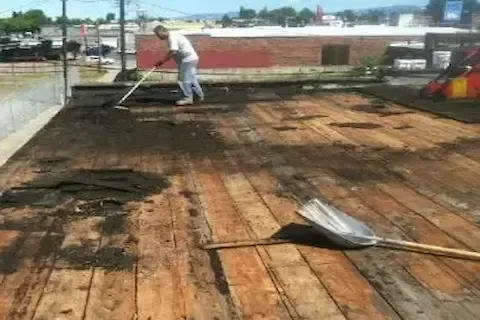
Commercial re-roofing overlays for Maple Grove properties. A cost-effective flat roof solution when the existing substrate qualifies for new membrane installation without full tear-off.

Scheduled commercial roof maintenance programs for Maple Grove property managers. Inspections, drain clearing, minor repairs, and documented condition reporting to extend membrane life.
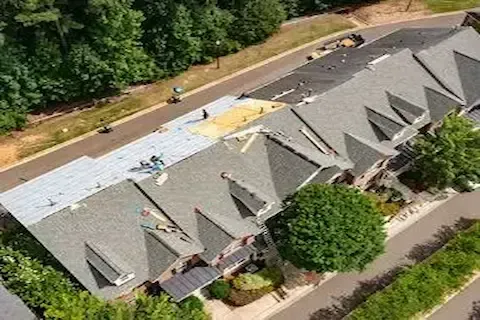
Community-wide roofing programs for Maple Grove HOA boards, townhome associations, and apartment property managers, with coordinated replacement, phased scheduling, and board-ready documentation.
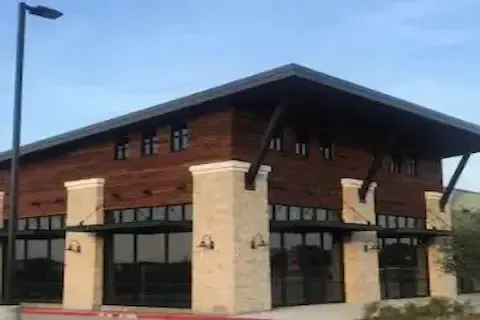
Flat roof replacement and repair for Maple Grove's retail corridor properties. Arbor Lakes, Maple Grove Crossing, and Highway 169 commercial properties served.

Commercial roof coating and restoration for Maple Grove properties that qualify. Silicone and acrylic systems that extend flat roof membrane life without full replacement.
Frequently Asked Questions
Commercial Roofing Contractor can be complex, and we’re here to provide answers to common questions. Here are some frequently asked questions from our clients.
Frequently Asked Questions about Commercial Roofing Contractor Maple Grove Mn
What types of commercial roofing systems do you install in Maple Grove?
We install TPO, EPDM, modified bitumen, and BUR flat roofing systems on commercial properties throughout Maple Grove. The right system depends on your building type, age, and budget. Retail properties in Maple Grove's Arbor Lakes corridor typically benefit from TPO installations, while older commercial buildings with existing EPDM membranes often qualify for re-roofing overlays. We assess each property individually and provide written material recommendations before any work begins.
How long does a commercial roof replacement take in Maple Grove?
Most commercial flat roof replacements in Maple Grove take two to five days depending on building footprint and access conditions. Retail buildings with active tenant operations require phased installation planning coordinated with Hennepin County permit timelines and scheduled to minimize business interruption. Larger multi-building projects such as HOA communities and office parks are phased over one to three weeks.
Do you pull permits for commercial roofing work in Hennepin County?
Yes. All commercial roofing work in Maple Grove requires permits from the city building department. We pull all required permits as part of every project. Commercial property owners should be cautious of contractors who suggest skipping this step because unpermitted commercial roofing work can void manufacturer warranties, create liability issues, and complicate property sales. We handle the permit process from application through final inspection sign-off.
How much does commercial roof replacement cost in Maple Grove?
Commercial flat roof replacement in Maple Grove typically ranges from $8 to $18 per square foot depending on system type, tear-off requirements, deck condition, and current material costs. TPO installations generally run $10 to $14 per square foot installed. EPDM re-roofing on existing systems can be lower where structural conditions allow. We provide detailed line-item estimates after a roof inspection because phone estimates without an in-person assessment are unreliable for commercial projects of any size.
How often should a commercial flat roof be inspected in Maple Grove?
Commercial flat roofs in Maple Grove should be inspected twice annually — once in spring after freeze-thaw season and once in fall before winter. Minnesota's freeze-thaw cycling puts consistent stress on membrane seams and flashing details, and small issues identified in spring are significantly less expensive to repair than damage discovered after another Minnesota winter. Properties with HVAC equipment on the roof should add a third inspection after any major service work.
What is the difference between commercial re-roofing and a full replacement?
Re-roofing installs a new membrane layer over the existing roof system without tearing off the existing material. Full replacement removes the existing membrane and insulation down to the deck. Re-roofing is appropriate when the existing deck and insulation are in sound condition. Maple Grove's 1980s and 1990s commercial building stock often qualifies. Full replacement is required when moisture has compromised the insulation or the deck needs structural repairs. We core cut and assess every commercial roof before recommending an approach.
Need Commercial Roofing Contractor?
What Our Satisfied Clients Have to Say About Maple Grove Commercial Roofing Co.
We pride ourselves on delivering great results and experiences for each client. Hear directly from home and business owners who’ve trusted us with their Commercial Roofing Contractor needs.

We had three bids on our Arbor Lakes strip mall roof. This team was the only contractor who came out, cored the existing system, and told us we actually qualified for re-roofing instead of full replacement. Saved us real money and the work was done correctly.
David Kowalski
As a property manager overseeing six commercial buildings in Maple Grove, finding a roofing contractor who actually documents their work and files permits correctly is harder than you think. These folks pull permits, file the inspection paperwork, and send a written report after every visit.
Sandra Nygaard
Our HOA board was dreading the community roof replacement process. They handled the board documentation, phased the work so residents were not all disrupted at once, and finished ahead of schedule. The entire association is satisfied.
Marcus Ellefson
The Trusted Commercial Roofing Contractor Expert Near You
Ready to hear more about expert services at Maple Grove Commercial Roofing Co.?
Contact us today to receive a detailed, no-obligation quote.

Maple Grove & the Twin Cities metro
Monday-Friday: 9am-5pm, Saturday: 11am-3pm

Quick Links